

“Pretty lucky.”
“My lucky day?” I asked.
“Your lucky day” he repeated.
“What do you mean, lucky?”
My colleague looked up from the bar till.
“Look.”
An emerald-green praying mantis was slowly climbing the mug from which I had been drinking my instant coffee before the morning shift began. Its warm, unblinking eyes met mine beneath the pale winter sun of the Cape.
He stepped closer.
“Didn’t you know? For the San, these creatures are sacred. Apparently, if you come across one, it’s because it has chosen you. It will bring you good fortune... or perhaps not. It’s complicated. More like an omen.”
“Mmm... if you say so.”
“It’s not me saying it,” he replied. “It’s the people who were here before you arrived. Before we arrived. Perhaps even before time itself.”
“Right... I understand,” I said, gently lifting the mantis onto an empty matchbox.
“Then... where are the San now?”
He looked at me for a moment.
“Far away,” he replied. “In the desert.”
I looked at the small creature resting on the matchbox and wondered about the people whose stories were still carried by the landscape, even after they had been pushed away from it.
South Africa, a country of extraordinary complexity, carries one of the most visible contradictions of the modern world. The geography of separation did not disappear with the end of apartheid; in many ways, it changed form.
This is where the country’s estates come into view: gated residential developments of identical streets and near-identical houses, many of them designed with everything needed to live without ever leaving their boundaries. Parks, schools, gyms, small shops and even restaurants sit behind walls, surveillance cameras and electric fences, while life continues beyond the gates of Johannesburg, Durban and Cape Town.
The barriers are no longer decreed by the state, but shaped by the property market. They appear on roadside billboards with reassuring promises: Looking for a safe place to raise your family? Plots for sale. A peaceful retirement. The promise is always the same: security.
It is difficult not to wonder how the displacement of communities initiated by the Natives Land Act of 1913 has, decades later, contributed to new forms of separation. Many of these developments are culturally and linguistically dominated by English and Afrikaans, creating spaces where contact with the country’s diversity is often limited by the walls surrounding them.
I began to notice that the geography of Cape Town was divided not only by streets and neighbourhoods, but by invisible distances.
Many of the people who worked in and around the city did not live nearby. At the end of their shifts, they waited for taxis that would take them back towards places like Khayelitsha, many kilometres away from the coastal suburbs where they spent their days working.
One evening, I mentioned that they could come inside the bar while they waited. They could have a drink, sit down for a while. We could even make some money.
The answer was no.
It was a small moment, almost insignificant. Yet it stayed with me. There were places where some people belonged, and places where they remained outside.
Yet what stayed with me most was not the separation itself, but the contradiction behind it.
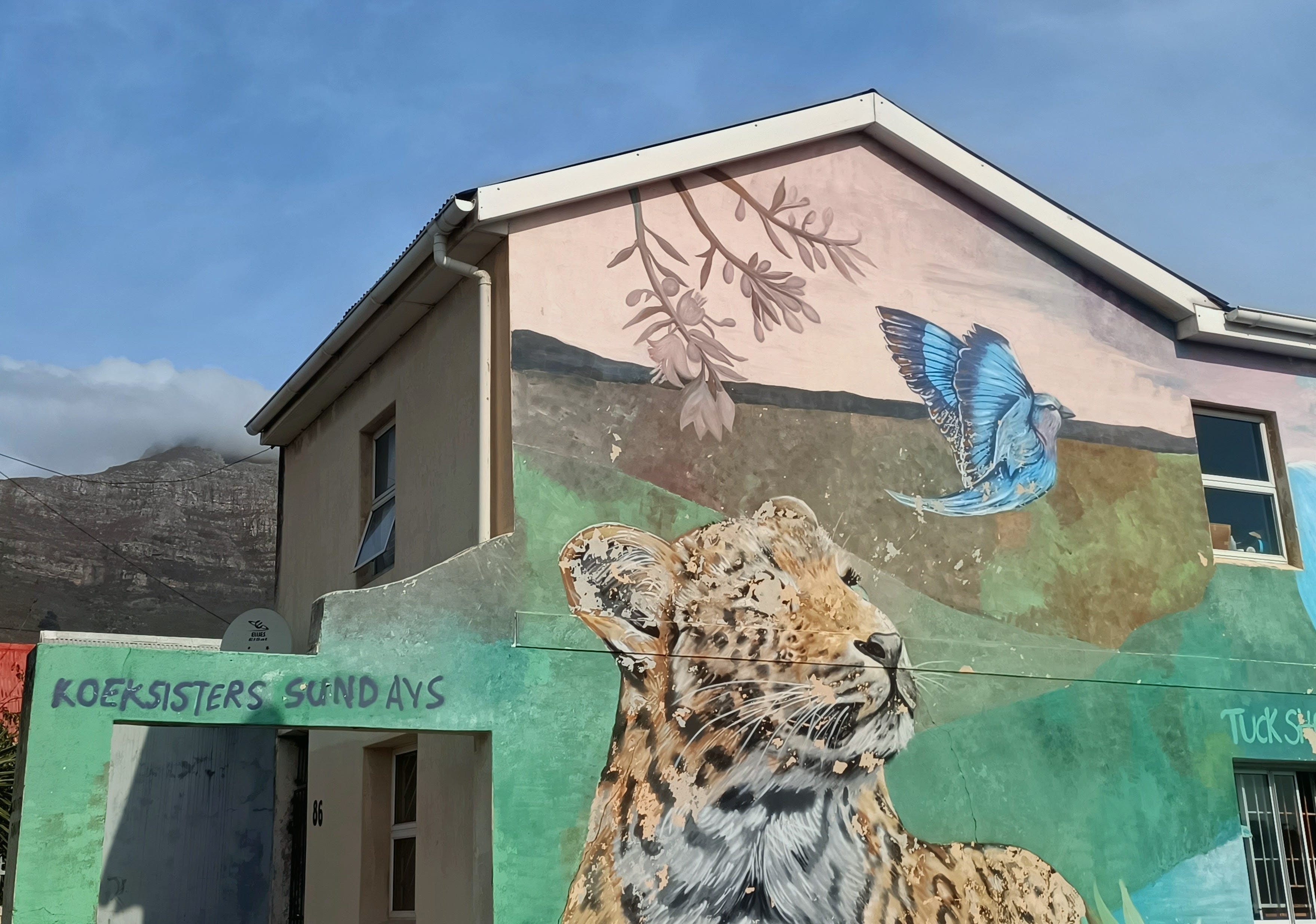
I had fallen in love with South Africa: the winter light over the Cape, the endless landscapes, the humour of the people I worked with, and the conversations that continued long after the bar had closed.
Many evenings, after the last customers had left, my South African colleagues and I spoke about the country we shared. We wondered how a place of such extraordinary beauty could carry so much pain.
How could a country with such warmth, creativity and resilience continue to leave so many of its own people behind?
The question was never about the land. The land was magnificent.
The question was always about the people who belonged to it.
I came to understand that loving a country means loving more than its landscapes. It means caring about the people who wake up every morning within it, who carry its history, its contradictions and its hopes.
Perhaps that is why the contradictions hurt so much.
The more I cared about South Africa, the more difficult it became to understand how a place of such extraordinary beauty could remain divided by invisible borders.
One night in Cape Town, before switching off the light, I saw a small emerald figure twisting through the cold Atlantic air. The mantis drifted away through the bars of my window and disappeared into the night.
The mantis knew nothing of gates.
Wow, what a wonderful Article
Yes, loving a country is not only means land, but the people, culture, language and choices
Thanks for sharing and keep writing 💫
Just highlighting this part
The barriers are no longer decreed by the state, but shaped by the property market. They appear on roadside billboards with reassuring promises: Looking for a safe place to raise your family? Plots for sale. A peaceful retirement. The promise is always the same: security.
I had fallen in love with South Africa: the winter light over the Cape, the endless landscapes, the humour of the people I worked with, and the conversations that continued long after the bar had closed.
I came to understand that loving a country means loving more than its landscapes. It means caring about the people who wake up every morning within it, who carry its history, its contradictions and its hopes.
Can you share your articles in my community thread by subscribing me??
I give weekly Shoutouts to wonderful writers like you 😀😀😀
I need this in a book!!