

It was late.
Losing five or ten minutes on the way to class was inevitable. The crowded, maze-like corridors of Rikkyo University swallowed students by the hundreds, and every morning I felt like an ant disappearing into the Ishikari supercolony.
And I was late.
I drained the last sip of my vending machine coffee as a spring storm rolled across Tokyo. Class was about to begin, and for a moment my only concern was making it there on time. Then, just as I slipped my phone into my pocket, it rang. I didn’t know it then, but that call would become the first step towards a story I had never intended to find.
I glanced at the screen.
A new email.
A few lines I did not care to read at all.
Normally, I dismissed them as casually as someone tears a page from a calendar. We leave days behind without thinking twice, making room for whatever comes next. I did the same with that message, tucked my phone away, and joined the river of students flowing across the university grounds. Ikebukuro had turned red and grey beneath the spring rain, and somewhere between the station and campus I realised I couldn’t even remember the classroom number.
“Daniel.”
I turned.
“I’ve been trying to reach you,” my professor said.
“I’m sorry. I didn’t notice your call,” I replied, knowing perfectly well that I had.
She smiled. “It seems to be your lucky day.”
“They’ve accepted.”
“Really?”
I tried to sound composed, though my thoughts had already outrun the conversation.
“So... when?”
“Tomorrow.”
She handed me a small slip of paper with an address written neatly in Japanese and English.
“Go here. They’ll meet you outside the school. Don’t worry—you’ll recognise them.”
Then, almost as an afterthought, she added, “And since you were late, that goes on your attendance record. Now go and find a seat.”
I don’t remember much of the lecture that followed. My Korean professor spoke about aesthetics. That week we watched Chungking Express. We talked about the end of the British Empire, the rise of twenty-first-century China, old and new forms of colonialism, and the restless energy of East Asian cities. As Faye Wong’s cover of Dreams drifted through the darkened classroom, I found myself somewhere else entirely. I was no longer in Hong Kong.
They had agreed.
The images flickered across the screen, but my thoughts had already left the cinema. I imagined tomorrow before it had arrived: a school entrance in another corner of Tokyo, unfamiliar faces, perhaps a few words of Korean if necessary, and the strange realization that I was about to step into a community I had known only through books, newspaper articles, and scattered conversations.
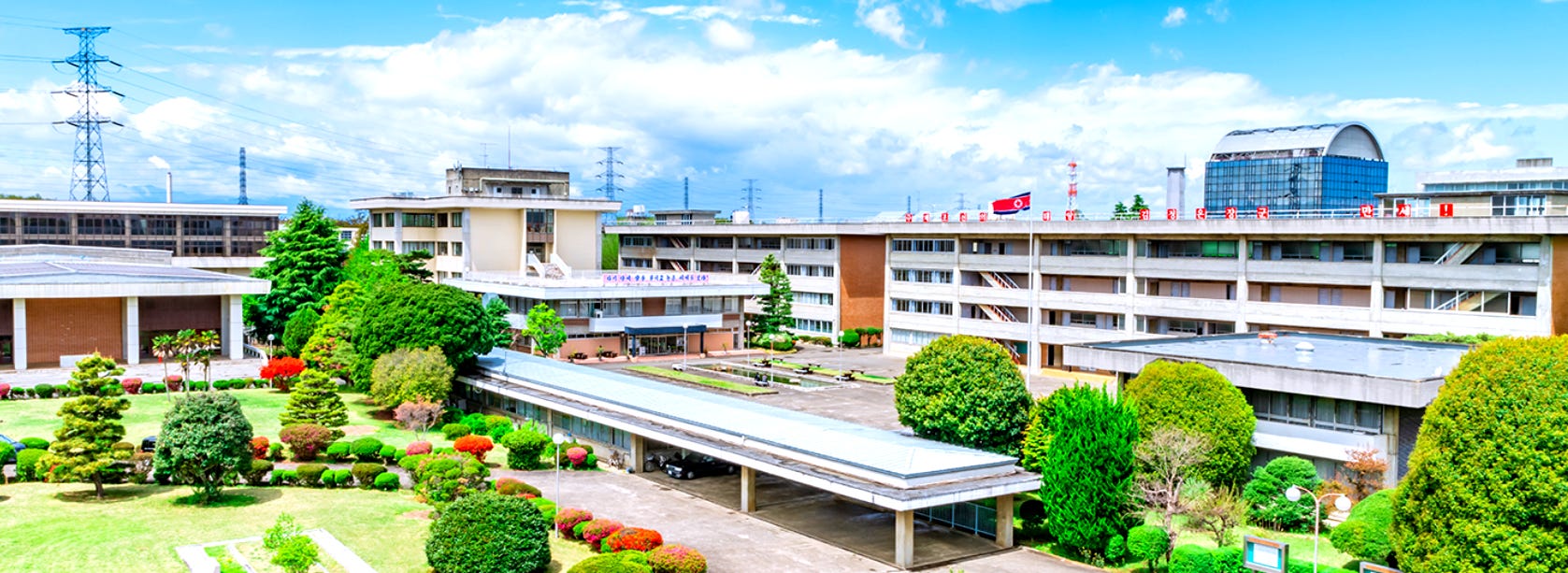
Tomorrow, for the first time, I would meet students from Korea University. Before that moment, Chongryon had existed only as an idea. Officially, it is the General Association of Korean Residents in Japan, founded in 1955 and historically associated with North Korea. That much was easy to learn from books. What interested me was everything those books couldn’t explain. To many Japanese, Chongryon is a familiar but distant presence—visible enough to be recognized, yet rarely understood. Outside Japan, it barely exists in the public imagination. But for the students I was about to meet, it wasn’t a political headline or a historical curiosity. It was simply the world they had grown up in.
That was the world I wanted to understand. Finding them had taken more than a month. I spoke with my professor, who introduced me to a South Korean film lecturer. The lecturer put me in touch with a former student from Korea University, who in turn passed my request to the community. Weeks went by with no reply. Every lead seemed to end where the next one should have begun.
Then, unexpectedly, they called. It took less than a week to arrange the meeting.
On the appointed day, I found myself standing outside the gates of Korea University. By then, my shirt was soaked through. Getting there had meant changing trains several times, crossing the western suburbs of Tokyo, and walking the final stretch beneath a quiet avenue of maple trees that led to the university’s heavy iron gates. I had arrived too early.
Impatience got the better of me. I lit a cigarette. Then another. By the fourth, I was checking my phone every few seconds.
Suddenly, the heavy wooden doors opened. Five students emerged.
They wore matching uniforms of deep Prussian blue and bright white, walking side by side with the effortless coordination that only years of shared routine can produce. I crushed my cigarette beneath my shoe as hurriedly as a teenager caught smoking by his parents. Then I looked up.
“Welcome,” they said together.
“Please, come in.”
Without another word, they led me through the doorway and into a small reception room. It was plain and almost austere. Two faded green armchairs stood opposite a simple wooden table. The room carried no particular scent, only the stillness of a place used more for conversation than decoration.
The students took their seats. I settled into the armchair opposite them. For reasons I still struggle to explain, the room felt much larger than it was.
“Would you like something to drink?” one of them asked. “It’s warm today.”
“Whatever you have is perfect. Thank you.”
Only then did I allow my eyes to wander. On the wall above them hung framed portraits of the Kim family. A few moments later, they returned with a bottle of Coca-Cola. For an instant I considered asking what they thought of serving one of the world’s most recognizable American products beneath those portraits. The question crossed my mind almost as quickly as I dismissed it. It was too clever, too obvious, and far more about my assumptions than theirs.
Instead, I accepted the glass.
“It’s very refreshing,” I said.
The truth was that I had never liked Coca-Cola. But in that moment, it became something familiar—an anchor in a room filled with people I did not yet understand. A Coca-Cola is a Coca-Cola, no matter where you are in the world. People are never quite so simple. I opened my notebook. The interview began.
The room fell quiet.
For a moment, none of us spoke. They watched me with the same curiosity that had brought me there. I had come to ask questions about their lives; perhaps they were wondering why a foreign student from Europe had travelled across Tokyo to ask them in the first place.
I began with the simplest question I could think of.
“What do you want to do after university?”
One of the young men answered first.
“I know it’s difficult to work in North Korea,” he said. “But I’m studying business administration and commerce. I’d like to help bring China and North Korea closer together. There are opportunities along the border. I think that’s where the future is.”
“How?” I asked.
He smiled.
“I don’t know yet. But someone has to try.”
A young woman spoke next.
“It isn’t so important what people think we are,” she said. “What’s important is what we’re able to become.”
Another nodded.
“There have been problems with some political groups in Japan,” she admitted. “But my family is here. My friends are here. Why would I leave just so someone could say, ‘Oh, you’re from Japan’?”
The conversation drifted naturally between politics and ordinary life.
When I asked what the future held for their community, one student answered seriously.
“We want to make our families and our teachers proud.”
He paused.
“As for the next few years...”
The others smiled.
“...first I’d like to pass next week’s exam.”
The room burst into laughter.
I asked one final question.
“If you could say one thing to Japanese students, what would it be?”
There was a brief silence.
One student answered quietly.
“Our grandparents came here a long time ago. We’re part of this island too.”
Another spoke.
“I’ve never even been to Korea. Being Japanese is the only life I’ve ever known.”
Then a third looked around the room before saying, simply,
“We’re the same.”
When the interview ended, a snow-white veil of spring pollen hung in the air as I said goodbye to the students at the gates of Korea University. As I walked away, they stood waving from a distance, their arms raised against the afternoon sky. From afar, their figures slowly dissolved into the sunlight as I turned the corner towards Takanodai Station.
Later, on the train back to Ikebukuro, I found myself thinking about them—their immaculate uniforms, their quiet composure, their young, calm eyes, and the words they had entrusted to me. How was I ever going to explain all of this? Would my Japanese classmates understand? Would they simply shrug and move on? Did it even matter who they were? Who would they become? Who are we, after all?
As the train carried me back through Tokyo, I thought again of those figures beneath the heavy spring sun. Outside, the electric lights climbed the walls of Shibuya as evening slowly settled over the city. I made my way home with a notebook full of words and the eyes of those Chongryon students—filled with hope, uncertainty, and the future itself—etched into my own.